Free Forex Education
Free Lesson: Market Structure Basics
In this 12-minute reading lesson I break down how I mark market structure and key levels before I ever look at an entry. Educational content only. Not a signal. Not financial advice. For ages 18+.
1. What "market structure" means
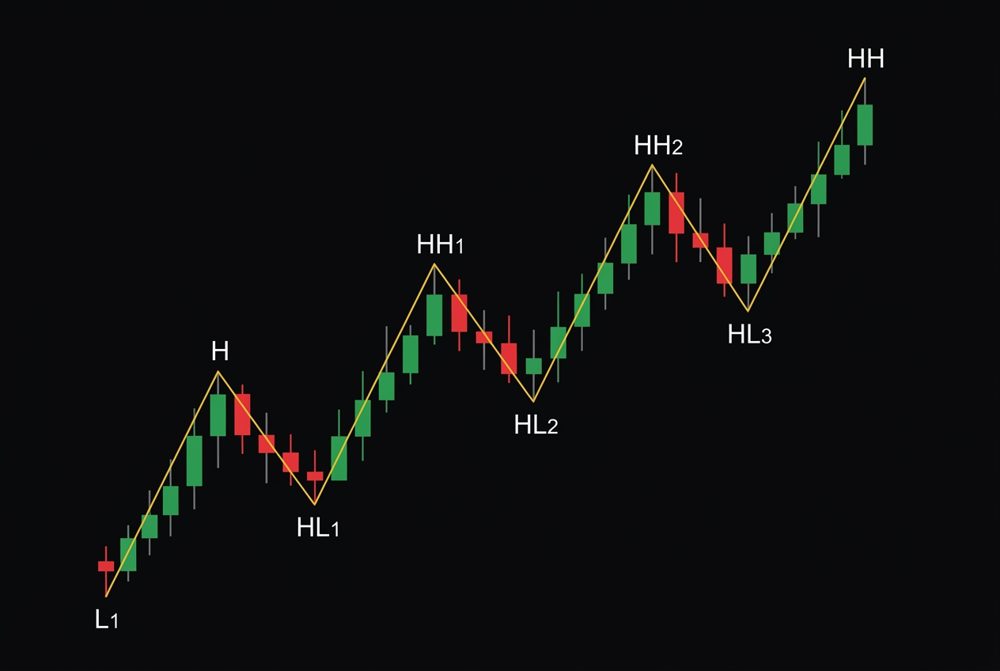
Price does not move in straight lines. It moves in swings: a swing high, a pullback, a higher high, another pullback. When those swings keep making higher highs and higher lows we call the structure bullish; lower highs and lower lows make it bearish. Everything else in CRT is built on first reading this correctly on the higher timeframe (Daily and 4-hour).
2. Key levels — where the big decisions are made
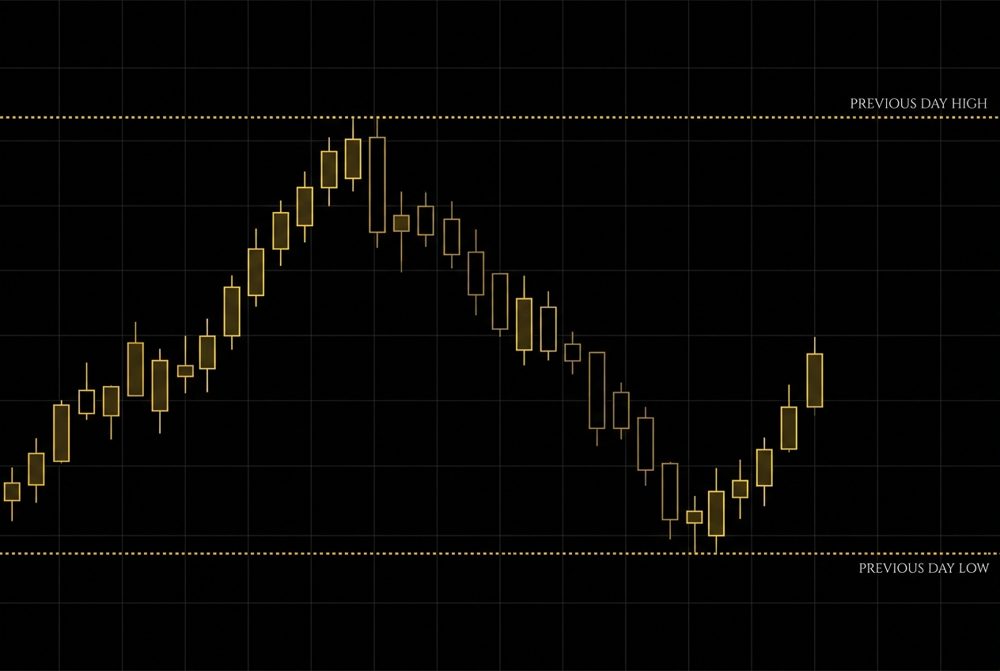
A key level is a price where the market has previously reversed or paused with strength: a previous day high/low, a weekly high/low, or the open of a clear range. Mark them before the session starts. In our method a level is only "key" when time and price agree: it formed during an important session and price reacted to it clearly.
3. Liquidity — why price visits old highs and lows
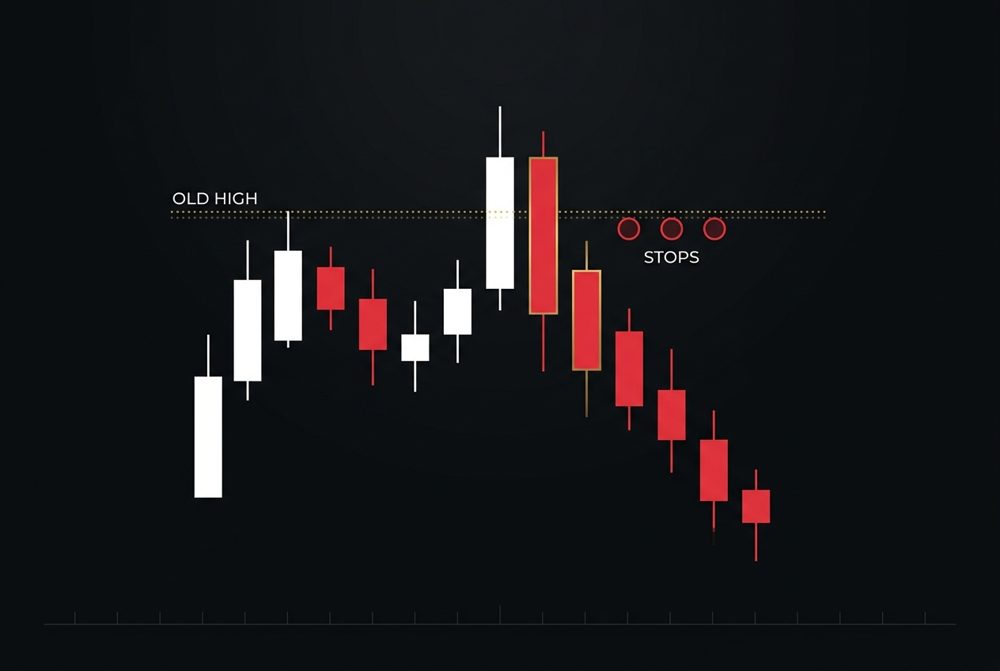
Behind every obvious high sit stop orders. Price often reaches above an old high, triggers those stops, and only then reverses. We call that a sweep or "purge". Learning to expect the sweep instead of chasing the breakout is the single biggest mindset shift new students experience.
4. The range candle (the heart of CRT)
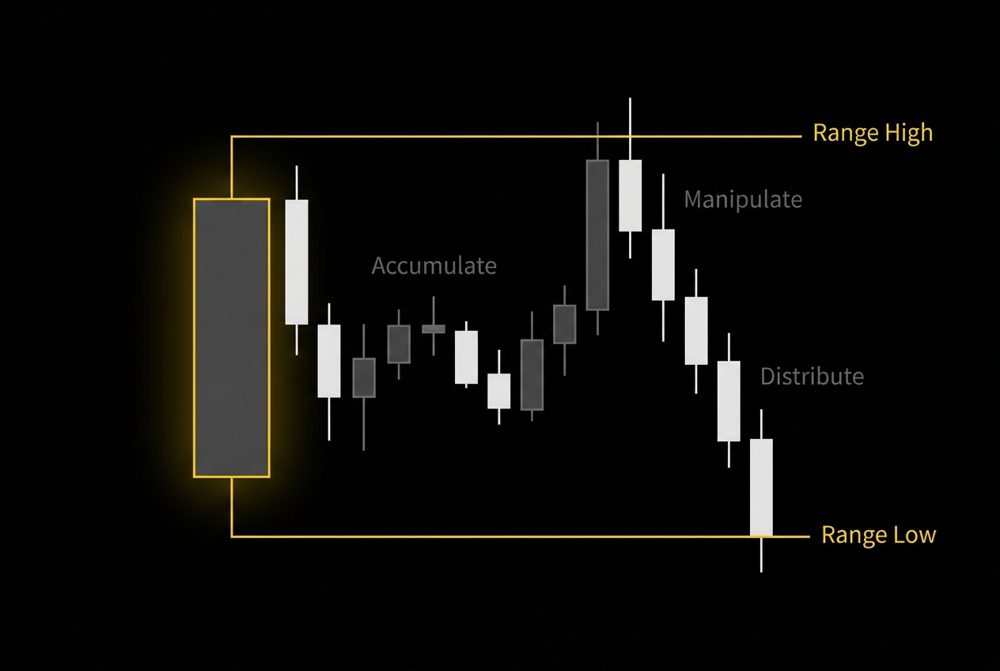
Candle Range Theory watches one higher-timeframe candle — for example a 4-hour candle — as a range: its high and low. The next candle usually does one of three things: accumulates inside the range, manipulates one side (sweeps it), then distributes toward the opposite side. Recognising which phase you are in is the whole skill.
5. Time over price
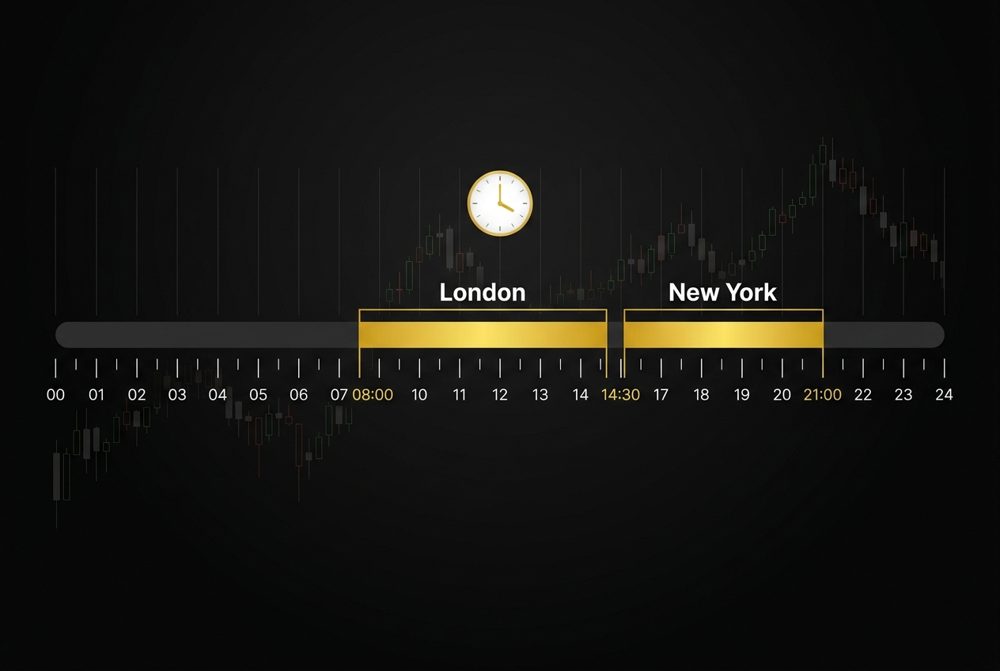
The same chart pattern means different things at 3 a.m. and 3 p.m. Our rulebook defines specific session windows (London and New York) where manipulation and distribution are most reliable. Outside those windows, the correct action is usually to study and wait.
6. Risk management is the lesson, not the footnote

Every example in the academy is reviewed with a defined invalidation point and a fixed, small percentage of practice capital at risk. Learning to accept a planned loss calmly is more important than any entry technique.
Practice exercise for this week
- Open a Daily chart of any major pair and mark the last 5 swing highs and swing lows.
- Write down whether structure is bullish, bearish or ranging — in one sentence.
- Mark yesterday's high and low. Watch (do not trade) how price behaves around them during London.
- Journal what you saw. Repeat for 5 days before moving to the next module.
Continue learning
Create your free student account
Registration is free. You get a student dashboard, the curriculum map and the learning community. Full training modules and practice tools unlock when you complete enrollment.